
10 Principles for a Healthy Parent-Child Relationship

10 Secrets to a Positive Parent-Child Bond
A healthy parent-child relationship is built on love, trust, and respect.
By following simple principles—like spending quality time, encouraging more than criticizing, setting boundaries, and practicing empathy—parents can create a strong emotional bond.
These principles guide children to grow with confidence, responsibility, and lasting family connection.
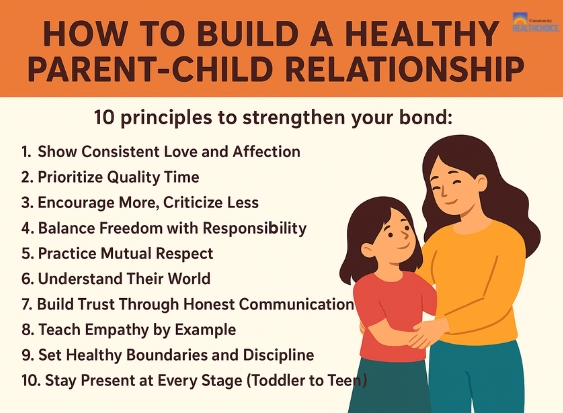
1. Show Consistent Love and Affection
A healthy parent-child relationship is built on love that goes beyond words. Children feel secure when parents show affection through small actions like hugs, bedtime stories, or saying “I’m proud of you.” This consistent love strengthens their confidence and helps them face challenges, knowing they always have a safe and supportive home environment.
2. Prioritize Quality Time
Time is the most valuable gift you can give your child. Even if your schedule is busy, dedicate moments just for them—like family dinners, bedtime talks, or weekend outings. Quality time doesn’t always mean expensive trips; even a 15-minute walk or cooking together builds connection.
3. Encourage More, Criticize Less
Children thrive on encouragement. Positive reinforcement motivates them to try new things, while constant criticism can harm their confidence. Instead of saying, “You never do this right,” try, “I love the effort you put in, let’s improve together.” Encouragement builds courage and self-belief.
4. Balance Freedom with Responsibility
Every child wants independence, but with freedom comes responsibility. Allow age-appropriate decision-making, like choosing clothes or managing chores. Teach them that privileges—like screen time—are linked with accountability. This prepares them for real-world responsibilities.
Tim Montgomerie Health Problems: Facts and Mental Health Journey
5. Practice Mutual Respect
Respect should flow both ways. Parents often demand respect, but children also need their opinions and feelings acknowledged. Respecting their privacy, listening to their views, and treating them kindly teaches them to return the same respect to others.
6. Understand Their World
As children grow, their world expands—friends, school, hobbies, and even social media. Take interest in their favorite games, music, or online platforms. This shows that you value what matters to them. Being involved without being controlling creates trust and keeps communication open.
7. Build Trust Through Honest Communication
Children need parents who listen without judgment. Encourage open conversations where they feel safe sharing fears or mistakes. Avoid overreacting when they confess something wrong; instead, guide them with empathy. Honest communication strengthens trust, which is the backbone of every relationship.
8. Teach Empathy by Example
Children learn empathy by watching their parents. Show kindness in your daily interactions—whether helping a neighbor or speaking politely to service staff. Discuss emotions openly, like asking, “How do you think your friend felt when that happened?” Such practices nurture compassion in children.
9. Set Healthy Boundaries and Discipline
Boundaries provide children with a sense of safety. Discipline doesn’t mean punishment; it means teaching responsibility. Instead of yelling, explain why certain actions are harmful. For example, replace “Stop shouting” with “Let’s use calm voices so we can understand each other better.” Clear, consistent rules make children feel secure.
10. Stay Present at Every Stage (Toddler to Teen)
Parenting evolves as children grow. Toddlers need physical closeness, preteens need guidance, and teens crave independence with support. Adapting your parenting style for each stage shows children that you understand and value their needs. Presence at every stage ensures the bond never fades.
Common Challenges in Parent-Child Relationships

Modern parenting comes with unique challenges:
- Busy schedules often leave little time for bonding
- Overuse of gadgets reduces meaningful conversations
- Communication gaps become wider during teenage years
- Overprotectiveness may limit independence, while neglect causes emotional distance
Acknowledging these challenges is the first step toward overcoming them.
Practical Daily Habits to Strengthen Your Bond
You don’t need grand gestures—small, consistent actions build a lasting connection. Try these daily habits:
Expert Insights and Scientific Backing

Psychologists highlight the importance of secure attachment in early years. According to the American Psychological Association, children with strong parental bonds show fewer behavioral problems and greater emotional regulation. Studies also reveal that parental involvement in education improves academic performance significantly. Science supports what love already teaches us: a connected family raises healthier, happier kids.
FAQs on Parent-Child Relationships
Q1: What makes a parent-child relationship strong?
Love, trust, communication, respect, and consistent presence are the foundation.
Q2: How can I rebuild a broken relationship with my child?
Start small—apologize if needed, spend quality time, and rebuild trust through honesty and patience.
Q3: What activities improve parent-child bonding?
Cooking, playing games, reading together, outdoor sports, and volunteering as a family are excellent bonding activities.
Q4: How do I balance discipline with love?
Use positive discipline—explain consequences calmly, set boundaries, and focus on teaching rather than punishing.
Final Thoughts
A healthy parent-child relationship doesn’t require perfection—it requires presence, patience, and love. By following these principles, parents can nurture trust, respect, and emotional connection with their children. Start small today: spend more time, listen with empathy, and encourage your child. Over time, these small steps will build a strong foundation for a lifetime of love and understanding.