
Atychiphobia: Understanding the Fear of Failure and How to Overcome It

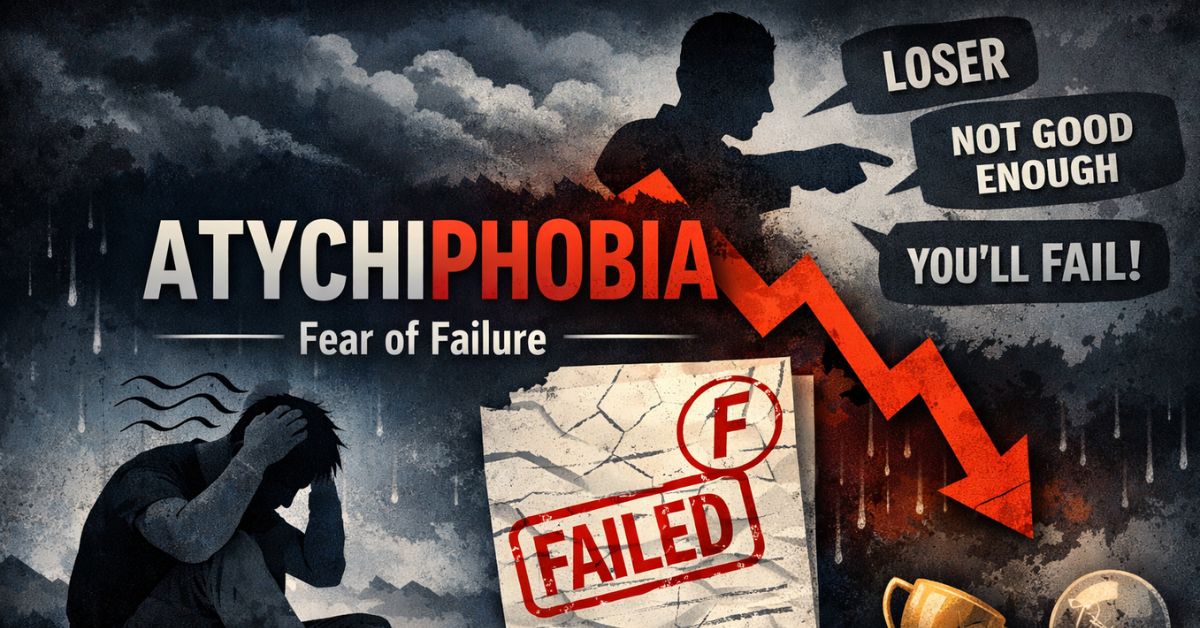
Atychiphobia is the intense and persistent fear of failure that can quietly control decisions, limit potential, and damage self-confidence. Many people feel nervous about failing, but atychiphobia goes deeper. It can stop someone from trying new things, applying for opportunities, or even setting goals. This fear is often hidden behind excuses, procrastination, or perfectionism.
In today’s competitive world, where success is constantly displayed on social media and in workplaces, the fear of failure is becoming more common. Understanding atychiphobia is important because it affects mental health, career growth, relationships, and personal happiness. This guide explains the causes, signs, real-life effects, and practical ways to overcome this fear using proven psychological insights and simple daily habits.
What Is Atychiphobia? Meaning and Psychological Background
Atychiphobia comes from Greek words meaning “fear of failure.” In psychology, it is considered a specific phobia linked to anxiety disorders. People with this fear often believe that failing means they are worthless, incapable, or will be judged harshly by others.
This fear usually develops from childhood experiences, strict parenting, academic pressure, or past humiliating failures. Over time, the mind connects failure with shame and rejection. The brain starts treating small risks as major threats. As a result, the person avoids situations where success is not guaranteed.
Unlike normal caution, atychiphobia creates a constant inner pressure to be perfect, which becomes emotionally exhausting and mentally limiting.
Common Signs and Symptoms You Should Not Ignore
Atychiphobia does not always appear openly. It hides in everyday behavior. Many people live with it for years without realizing the real cause behind their hesitation and stress.
Common signs include:
- Avoiding new opportunities
- Procrastination and overthinking
- Extreme perfectionism
- Fear of criticism
- Low self-confidence
- Anxiety before tasks or decisions
- Giving up easily when things feel uncertain
Physical symptoms may include sweating, fast heartbeat, nausea, or panic when facing challenges. These reactions are not laziness. They are fear responses triggered by the thought of possible failure.
What Causes the Fear of Failure?
Several factors contribute to developing atychiphobia. One major cause is childhood conditioning. Children who are punished harshly for mistakes often grow up believing errors are unacceptable.
Another cause is comparison. Constant comparison with siblings, classmates, or coworkers creates pressure to perform perfectly. Social media has increased this problem by showing only success stories, making failure look abnormal.
Past traumatic failures also play a role. A business loss, exam failure, or public embarrassment can create long-lasting fear. Over time, the mind tries to protect itself by avoiding situations that could lead to similar experiences.
How Atychiphobia Affects Daily Life and Career Growth
This fear can quietly damage personal and professional life. People avoid promotions, business ideas, public speaking, or skill development because they fear they might fail.
At work, it leads to missed opportunities and slow growth. In personal life, it creates hesitation in relationships and decision-making. Many talented individuals remain stuck in the same place for years because they never take risks.
The tragedy is that potential remains unused. The person knows they can do more but feels mentally blocked. This is how atychiphobia steals confidence and progress without being noticed.
The Hidden Link Between Perfectionism and Fear of Failure
Perfectionism often looks like a positive trait, but it is deeply connected to atychiphobia. Perfectionists set unrealistic standards. If they cannot achieve perfect results, they prefer not to try at all.
This creates a dangerous cycle:
Perfection → Fear of mistakes → Avoidance → No progress → More fear
Many people believe they are perfectionists when they are actually afraid of failing. Understanding this link helps break the cycle and replace perfection with progress.
What Top Articles Miss About Atychiphobia
Most websites explain symptoms and causes but fail to discuss real-life behavior patterns. They do not explain how atychiphobia shows up as procrastination, overplanning, or constant excuses.
They also miss the emotional cost. Living with this fear creates guilt, shame, and frustration. People feel angry at themselves for not taking action, which lowers self-esteem further.
Another gap is the lack of practical steps. Readers are told to “be confident” without learning how to retrain their thinking patterns. Addressing these gaps helps readers apply solutions in daily life.
Real-Life Example: How Atychiphobia Stops Talented People
Consider a talented student who avoids competitive exams because they fear failing publicly. Or an employee who never applies for a higher position despite having the skills. Or a creative person who never shares their work.
These are common examples of atychiphobia in action. The issue is not ability. It is fear of what failure might mean.
Understanding these examples helps readers recognize similar patterns in their own lives and take corrective steps.
Practical Strategies to Overcome Atychiphobia
Overcoming atychiphobia requires small, consistent steps. The goal is not to remove fear completely but to reduce its control.
Helpful strategies include:
- Setting small, achievable goals
- Accepting mistakes as learning tools
- Practicing self-compassion
- Challenging negative thoughts
- Taking calculated risks regularly
- Seeking therapy or counseling if needed
Cognitive Behavioral Therapy (CBT) is especially effective. It helps change how the mind interprets failure and builds healthier thinking patterns over time.
Comparison: Healthy Fear vs Atychiphobia
| Healthy Fear of Failure | Atychiphobia |
| Encourages preparation | Causes avoidance |
| Motivates improvement | Creates paralysis |
| Temporary nervousness | Constant anxiety |
| Leads to action | Leads to delay |
| Accepts mistakes | Fears mistakes deeply |
This comparison shows that not all fear is bad. The problem starts when fear stops action completely.
Pros and Cons of Living With This Fear
Pros (Short-term)
- Avoids uncomfortable situations
- Prevents immediate embarrassment
- Creates a false sense of safety
Cons (Long-term)
- Missed opportunities
- Low self-confidence
- Career stagnation
- Emotional stress
- Regret and frustration
Recognizing these pros and cons helps people understand why overcoming this fear is important for long-term growth.
How Parents and Teachers Can Prevent This Fear
Early environment plays a big role. Children should be allowed to make mistakes without harsh punishment. Encouragement should focus on effort, not only results.
Teachers and parents can help by:
- Praising learning, not perfection
- Allowing children to try new things
- Avoiding constant comparison
- Teaching resilience after failure
This reduces the chances of developing atychiphobia later in life.
Daily Habits That Build Confidence Against Failure
Small habits create big changes. Writing daily achievements, trying one new task each week, and reflecting on lessons learned from mistakes can rewire thinking.
Mindfulness and journaling also help reduce anxiety. These practices make the mind calmer and more accepting of uncertainty. Over time, the fear of failure becomes weaker and easier to manage.
Consistency matters more than intensity when building confidence.
FAQs About Atychiphobia
1. Is atychiphobia a mental disorder?
Yes, it is considered a specific phobia related to anxiety disorders when it significantly affects daily life.
2. Can atychiphobia be treated?
Yes, therapy, especially CBT, and gradual exposure to challenges can help reduce this fear.
3. How is it different from normal fear of failure?
Normal fear motivates preparation, while atychiphobia causes avoidance and anxiety.
4. What triggers atychiphobia?
Childhood experiences, strict environments, comparison, and past failures are common triggers.
5. Can children develop atychiphobia?
Yes, especially if they grow up in highly critical or perfection-focused environments.
6. How long does recovery take?
Recovery varies but consistent effort and mindset change show improvement over time.
Conclusion: Turning Fear Into Growth
Atychiphobia can quietly limit a person’s life for years. It hides behind excuses, perfectionism, and hesitation. But the good news is that it can be managed and reduced with awareness and practical steps.
Failure is not the opposite of success. It is part of the journey toward it. When people learn to accept mistakes, they unlock confidence, creativity, and growth. Understanding atychiphobia is the first step toward breaking free from its control and moving forward with courage.