What Hormone Is Released During Orgasm? A Medical Guide for Women


Orgasm is often described as the peak of sexual pleasure, but medically, it is much more than a pleasurable sensation. It is a complex neuro-hormonal event involving the brain, nerves, muscles, blood vessels, and endocrine system working together in a highly coordinated way.
According to the American Psychological Association and leading medical institutions such as the Cleveland Clinic, an orgasm is the height of sexual arousal when the body releases built-up sexual tension. It produces intense feelings of pleasure in the genitals and throughout the body, typically lasting a few seconds. However, the effects of orgasm on the body and brain last much longer due to the powerful hormones and neurotransmitters released during this process.
For women, orgasm involves rhythmic contractions of the vaginal and anal muscles, increased heart rate, faster breathing, muscle tension, flushing of the skin, and the release of several “feel-good” hormones. Some women may also experience female ejaculation.
Understanding what happens during orgasm, what hormones are released, and how the sexual response cycle works can help women understand their bodies better, improve sexual wellness, and identify reasons behind difficulty in achieving orgasm.
What Is an Orgasm?
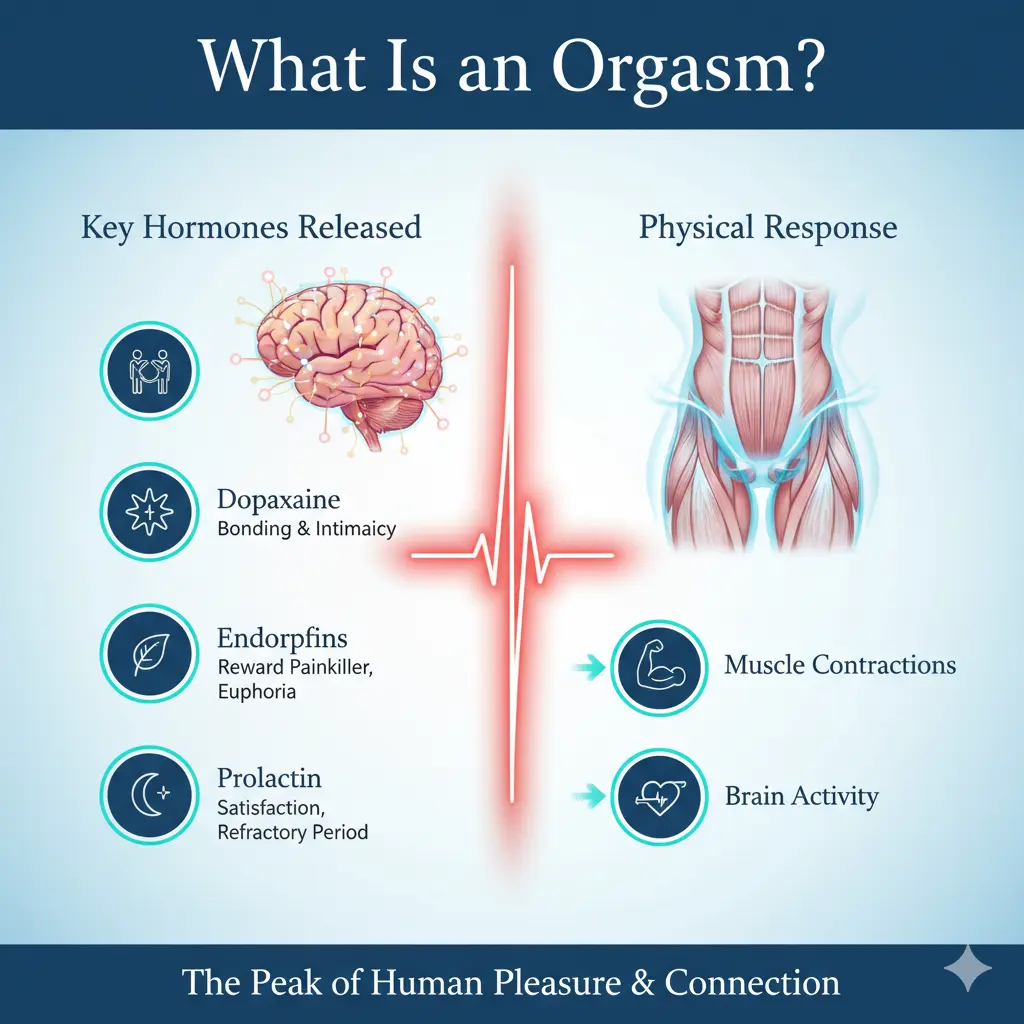
An orgasm is the climax or peak of sexual arousal that occurs after stimulation of the genitals or other erogenous zones such as the nipples, anus, neck, ears, or breasts.
It can occur during sexual intercourse, oral stimulation, manual stimulation, or masturbation. It is one of the four stages of the sexual response cycle: desire, excitement, orgasm, and resolution.
During orgasm in women:
- Vaginal and anal muscles contract about once per second for 5 to 8 seconds
- Heart rate, blood pressure, and breathing rate increase
- The vagina becomes lubricated
- Blood flow to the clitoris and vaginal tissues increases
- The face, neck, and chest may become flushed
- A feeling of relaxation, calmness, or sleepiness follows due to hormonal release
- The clitoris may become highly sensitive immediately after climax
Studies show that 10% to 70% of women may experience female ejaculation during orgasm, though this varies widely.
But orgasm is not just a genital event. It is primarily controlled by the brain.
The Sexual Response Cycle: Four Stages of Arousal
The most accepted model of sexual response is the Masters and Johnson four-phase model proposed in 1966. It describes the sequence of physical and emotional changes that occur during sexual stimulation.
These stages are Desire (Excitement), Plateau, Orgasm, and Resolution.
Excitement or Desire Phase
This phase begins with sexual thoughts, fantasies, kissing, touch, or stimulation.
During this phase:
- Muscle tension increases
- Heart rate and breathing increase
- Nipples become erect
- Blood flow to the genitals increases
- Clitoris swells
- Vaginal lubrication begins
- Breasts and vaginal tissues swell
This stage prepares the body for sexual activity.
Plateau Phase
This is a more intense continuation of excitement.
- Vaginal tissues swell further due to increased blood flow
- Clitoris becomes very sensitive and may retract slightly
- Heart rate, breathing, and blood pressure continue to rise
- Muscle spasms may occur in the face, hands, and legs
This stage leads directly to orgasm.
Orgasm Phase
This is the shortest but most intense phase.
- Sexual tension is released
- Rhythmic muscle contractions occur in the vagina and uterus
- Waves of pleasure spread throughout the body
- Hormones and neurotransmitters are released
- Some women may ejaculate
- Skin may show sexual flush
This is where the hormonal magic happens.
Resolution Phase
After orgasm:
- The body gradually returns to normal
- Swollen tissues return to normal size
- A feeling of relaxation and satisfaction occurs
- Some women may be able to have multiple orgasms with further stimulation
What Hormones Are Released During Orgasm?
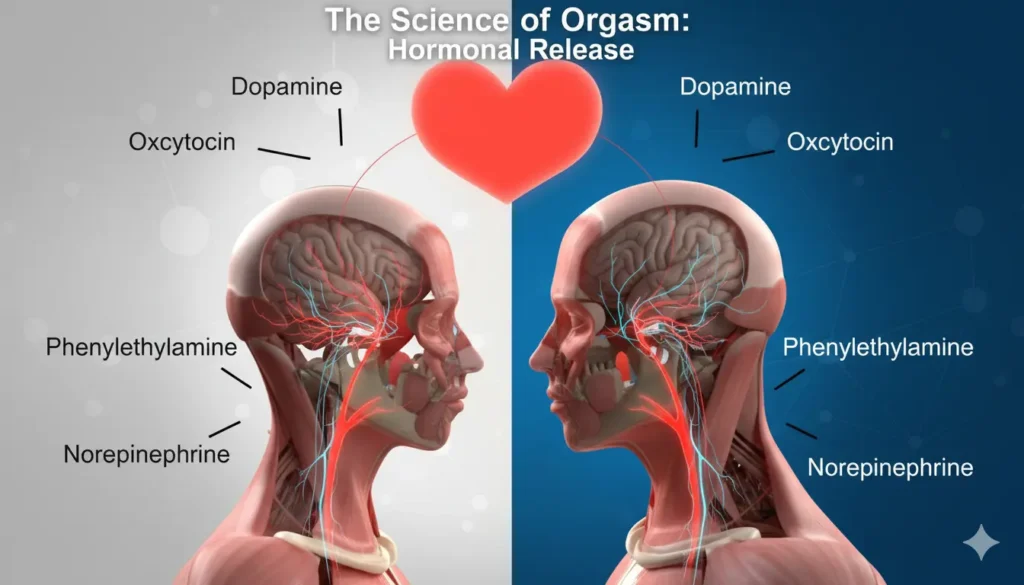
Orgasm triggers a surge of hormones and neurotransmitters from the brain. These chemicals are responsible for pleasure, bonding, satisfaction, and relaxation.
Dopamine – The Pleasure Hormone
Dopamine is released from the brain’s reward center. It is responsible for sexual pleasure, desire, and motivation. Dopamine makes orgasm feel intensely pleasurable and rewarding.
Oxytocin – The Bonding Hormone
Oxytocin is released from the pituitary gland into the bloodstream. It promotes feelings of love, bonding, trust, and emotional closeness. This is why people often feel emotionally connected to their partner after sex.
Oxytocin is also released during breastfeeding, highlighting its role in bonding.
Endorphins – Natural Painkillers
Endorphins are natural pain-relieving chemicals. They create a sense of calm, happiness, and relaxation after orgasm. They also help reduce stress and anxiety.
Prolactin – The Satisfaction Hormone
Prolactin is released after orgasm and is associated with the feeling of sexual satisfaction. It is also linked with the refractory period, the time needed before becoming sexually aroused again.
Serotonin – Mood Stabilizer
Serotonin contributes to feelings of contentment and emotional stability after climax.
Role of Estrogen in Achieving Orgasm
Estrogen plays a crucial role in female sexual function.
- It increases blood flow to the vagina, vulva, and clitoris
- Keeps vaginal tissues thick, elastic, and lubricated
- Maintains clitoral sensitivity
Low estrogen levels due to aging or hormonal disorders can reduce clitoral sensitivity and make orgasm difficult. This is why local estrogen creams are sometimes prescribed for women who struggle to climax.
Higher estrogen levels are associated with stronger and more intense orgasms.
Role of Testosterone in Female Sexual Pleasure
Though considered a male hormone, testosterone is very important in women.
It increases sex drive and arousal by stimulating norepinephrine, a neurotransmitter linked with sexual excitement. Testosterone also increases blood flow to the genital area, making orgasm more achievable.
Low testosterone in women is linked with low libido and difficulty achieving orgasm.
What About Progesterone?
Research on progesterone is limited and mixed.
Some studies suggest it may increase libido after ovulation. Others suggest it may dull erogenous sensitivity, leading to weaker orgasms. The effects vary between individuals.
Types of Orgasms in Women
Women can experience different types of orgasms:
- Clitoral orgasm felt on the surface of the body
- Vaginal orgasm felt deeper internally
- Anal orgasm through anal stimulation
- Combo orgasm through clitoral and vaginal stimulation together
- Erogenous zone orgasm through nipples, neck, ears, or other areas
Why Does Orgasm Feel So Good?
Because orgasm releases dopamine, oxytocin, endorphins, serotonin, and prolactin all at once. These hormones reduce cortisol (stress hormone) and create intense pleasure, relaxation, bonding, and happiness.
Health Benefits of Orgasm
Research shows orgasms may help improve:
- Sleep quality
- Stress levels
- Headaches and pain
- Menstrual cramps
- Heart health
- Self-confidence
- Emotional bonding
Why Some Women Struggle to Reach Orgasm
Many factors can interfere:
- Hormonal imbalances
- Stress and anxiety
- Past sexual trauma
- Lack of emotional connection
- Certain medications
- Poor physical or mental health
- Beliefs or taboos about sex
- Aging
If difficulty persists, consulting a healthcare provider or gynecologist is recommended.
Can You Optimize Your Orgasm Through Hormonal Balance?
Yes. Maintaining healthy levels of estrogen and testosterone, managing stress, improving emotional connection, and understanding your body can significantly improve sexual pleasure.
Final Thoughts
Orgasm is not just a moment of pleasure. It is a powerful biological event involving the brain, hormones, muscles, and emotions. Understanding what hormones are released during orgasm and how the sexual response cycle works can help women improve their sexual wellness and overall health.
If you find it difficult to achieve orgasm or experience changes in sexual pleasure, speak to a healthcare provider. Sexual health is an important part of overall well-being, and there are solutions available to help you enjoy a satisfying and healthy sexual life.